Title here
Summary here
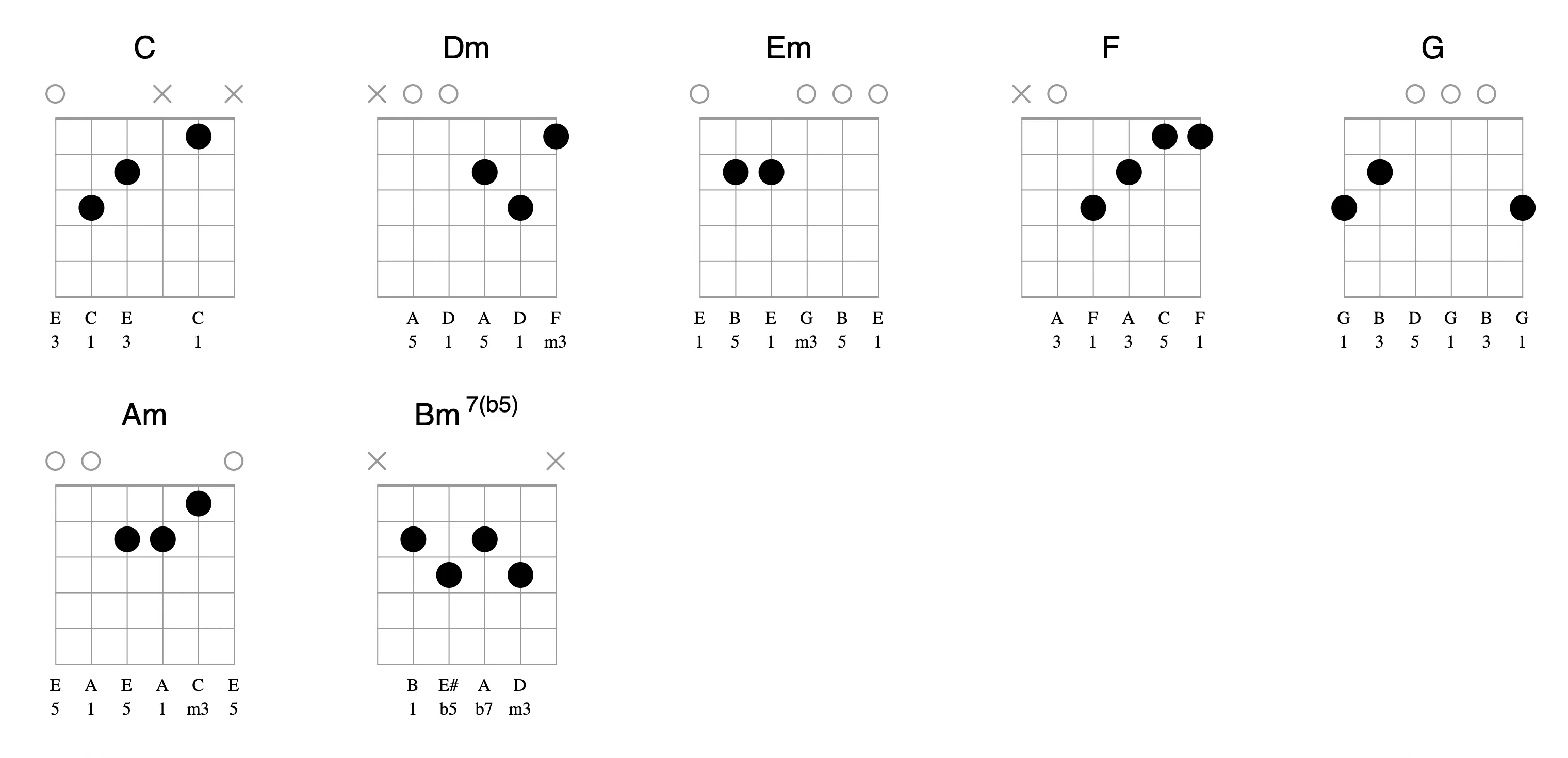
Why does the key of C reign supreme? Piano players love it because you can play everything on the white keys. When reading sheet music, the key of C has no sharps or flats. And we guitarists love it because every diatonic chord can be played in open position. As a refresher, here they are:
Practice
Play the chords in sequence starting on C. (You can skip the Bm7b5 but I put it in for completeness.) Voilà! You just played a C major scale using chords.
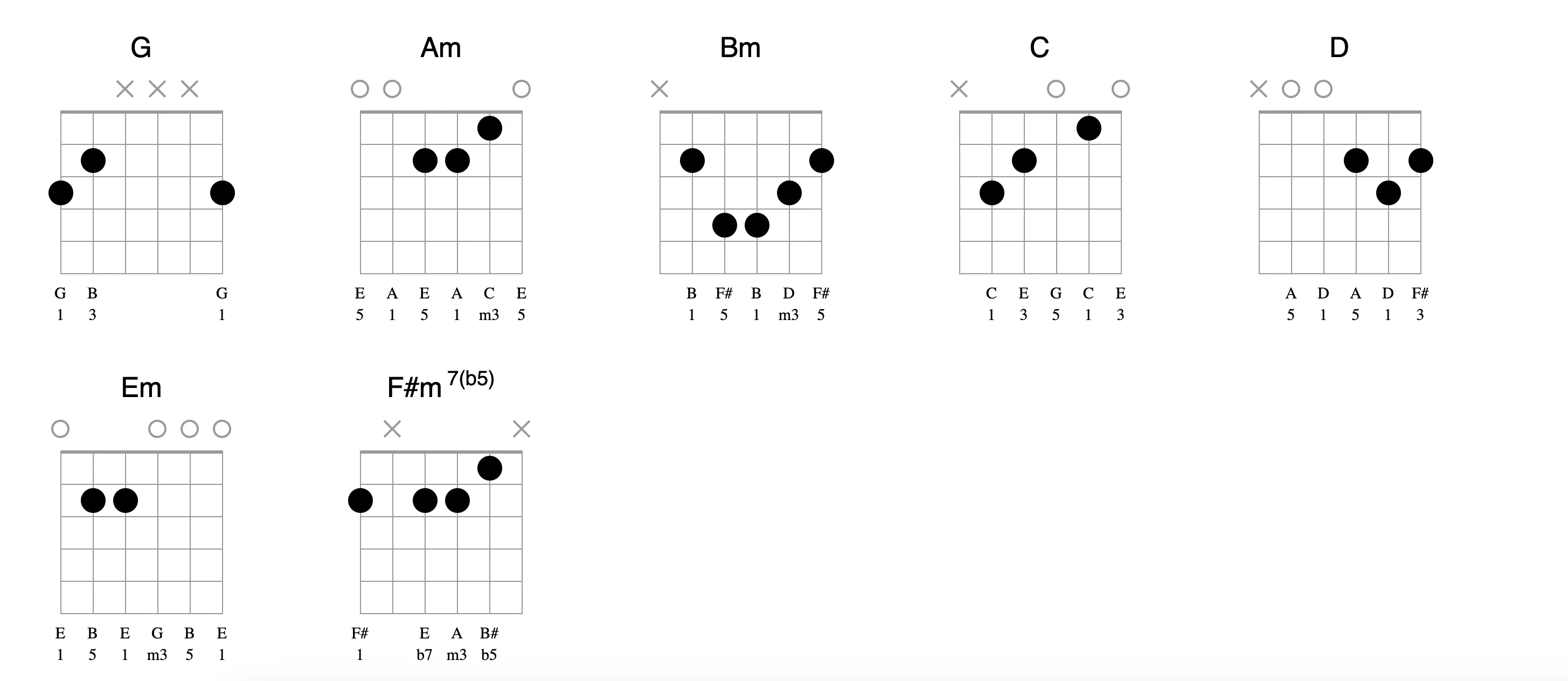
Guitar players love the key of G just as much as C. It features the same plethora of diatonic chords in position and has a deeper root note when in Ionian mode.
Practice
Do the same exercise with the chords of G. Play the chords in sequence starting on G. The Bm isn’t officially open position and the F#m7b5 is a curveball, but again they’re there for completeness. Skip them if you have to! You just played a G major scale using chords.
Fun Fact
An analysis of all 256 million songs on Spotify revealed that the majority of songs were written in the keys of C and G. In fact, in Jeff Tweedy’s How To Write One Song, he actively talks about avoiding the key of G when sitting down to compose because it’s become so cliché.
Capos are beautiful things. Don’t sleep on them! If you are super solid in the keys of G and C, you can play in any key by using a capo. This is particularly important when accompanying singers, either yourself or someone else. Rather than transposing a song into a different key (like a piano player would have to do), you simply throw on a capo to get in the right range for the singer. Keep moving up if the low notes are a problem; move down if the high notes are a problem. Worst case, you might have to transpose from C to G (if you need to get lower) or G to C (if you need to get higher).
The same holds true for instrumentalists. Let’s say you’re playing with a horn that wants to play in Bb or Eb, very common keys for them. Throw a capo on the 3rd fret and you’re good to go!
This trick even works for solo fingerstyle. Because the frets are closer together higher up the neck, certain moves become easier once a capo is on. A great example is hooking your thumb to play a low F note:
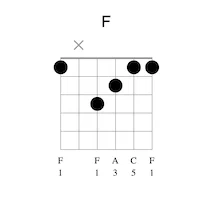
In open position, this can be a stretch for some hands, causing the note to either go sharp or not sound clear. But with a capo up a couple frets, this move becomes way easier and is a better shape than the full barre chord, giving you the bass note and all three notes of the triad.
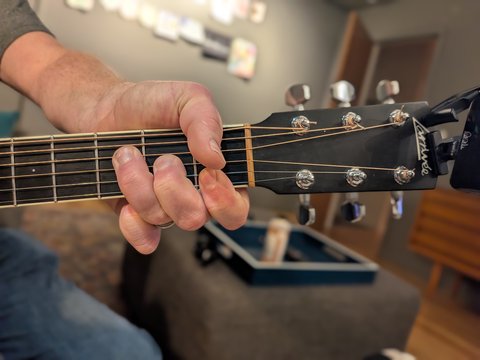
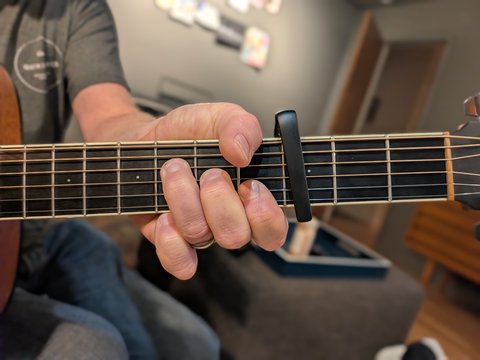
It also lends a different sonority to the instrument, so you aren’t always playing the same frequencies.
To be as facile as possible with a capo, you have to understand how each chord relates to its function — meaning you need to understand the role the chord plays relative to the root. There’s tons written on this, so I won’t go into it here, but you should know your Nashville numbers relative to the open position key of C chords (C = 1, Dm = 2, etc.) and G chords (G = 1, Am = 2, etc.).
Practice
Once you have this mastered, you can play any song by transposing the chords to numbers in nearly any key just by using a capo. Thinking about chords as numbers turns out to be super handy in your journey.